A faster month-end close is one of the clearest signals of a mature finance function—but in 2026, speed alone isn’t the goal. The goal is speed with proof: reconciled balances, controlled approvals, audit-ready support, and numbers leaders can trust.
The modern monthly close is no longer a mad dash of spreadsheets and Slack messages. It’s a repeatable operating system—often supported by outsourced partners like Xerosoft Global—that combines automation, controls, and a clear cadence.
Key Benefits

Shorter close cycles with fewer “surprise” adjustments
When close time drops, it’s usually because the team eliminates:
- Late coding and uncategorized transactions
- Missing documentation (bills, contracts, receipts)
- Unreconciled cash, AR, AP, and payroll timing differences
- Manual journal entries that should be automated or standardized
Modern approach: Shift work left—do more weekly (or even daily), so month-end is confirmation, not cleanup.

Accuracy improves through standardization and controls
Faster can be safer when you add discipline:
- Defined close checklist (tasks, owners, due dates)
- Preparer–reviewer workflow for reconciliations and journals
- Approval thresholds (who can post what, and when)
- Version control + documentation standards for support schedules
This is where outsourced accounting teams often outperform: they run closes like a production line—consistent, repeatable, and measured. Xerosoft Global can be positioned as that kind of structured close partner.

Better visibility for leaders, not just a finished P&L
A modern close doesn’t end with financial statements—it ends with insights:
- What changed this month?
- What moved margin?
- What’s happening with cash conversion?
- What risks should we flag now?
That’s the difference between “closing books” and “running finance.”

Audit-readiness becomes a byproduct, not a panic project
Firms that close well are typically audit-ready by default because they maintain:
- Reconciliation support tied to each balance
- Clear journal entry backup
- Policy documentation (rev rec, capitalization, expense rules)
- Clean rollforwards (prepaids, accruals, fixed assets, deferred revenue)

Conclusion
In 2026, the fastest closes aren’t achieved by “working harder at month-end.” They’re achieved by designing the close: standardization, continuous reconciliations, clear controls, and dashboards that highlight what matters.
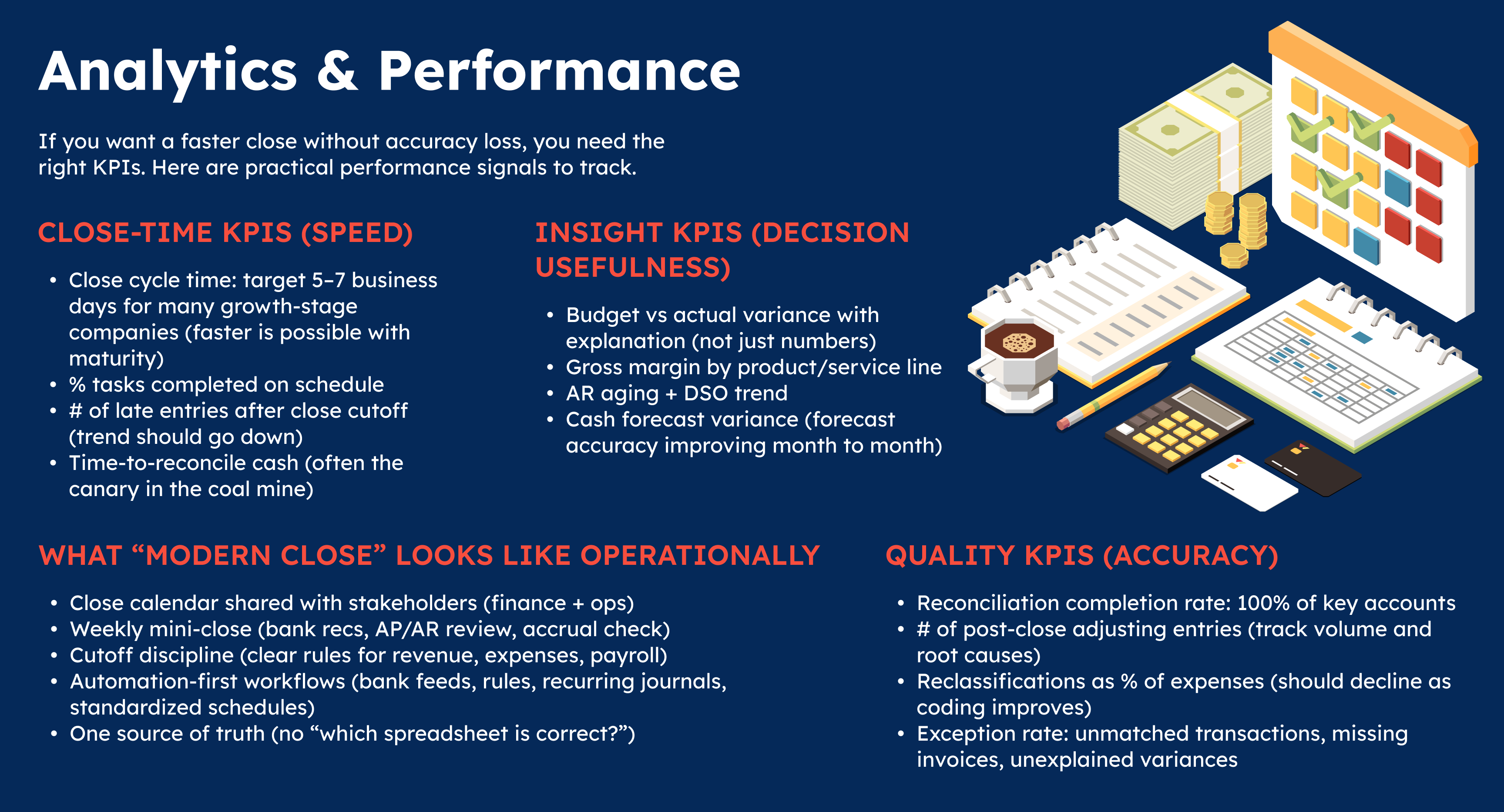
If your team wants to cut close time without cutting accuracy, focus on:
- A repeatable checklist + ownership model
- Strong reconciliations and review workflows
- Earlier cutoff clarity and weekly finance hygiene
- KPIs that measure speed and quality
And if you want to operationalize that quickly, a structured partner like Xerosoft Global can help implement a modern close system that scales with growth.