In volatile markets, profit doesn’t protect you—cash timing does. For SMEs, the forecasting method that consistently works isn’t a complicated model. It’s a simple, weekly discipline that combines a short-term cash view (to prevent surprises) with a medium-term view (to guide decisions). Firms like Xerosoft Global often help SMEs implement this as a repeatable finance process, not a one-off spreadsheet.
Key Benefits

Prevents “surprise” cash crunches before they happen
A working forecast answers the questions SMEs actually face:
- Will payroll clear on time?
- Can we reorder inventory without breaking cash?
- Do we need to slow hiring this month?
- What happens if a key customer pays late?
The best forecasting process forces visibility into collections, payables, and upcoming obligations—weeks before they hit.

Turns uncertainty into clear operating decisions
When markets swing, leadership needs “if-then” clarity:
- If sales drop 10%, what costs must flex?
- If supplier terms tighten, how much buffer do we need?
- If we offer discounts to accelerate collections, what’s the cash trade-off?
A forecast becomes a decision tool—not just a finance file.

Improves lender/investor confidence
Banks and investors don’t just want financial statements; they want proof you can manage liquidity. A consistent forecast shows:
- Control over working capital (AR/AP/inventory)
- Predictable cash discipline
- Early risk detection and mitigation actions
That credibility can unlock better terms and faster approvals.

Reduces stress across the business
SME volatility becomes manageable when the forecast is shared and operational:
- Sales understands collections targets
- Ops understands purchasing timing
- Leadership understands which levers matter this month
That alignment is often worth more than the model itself.

Performance KPIs to make the forecast trustworthy
Forecast accuracy metrics
- Weekly cash variance: (Forecast vs Actual)
- Variance drivers: collections timing, payroll, vendor payments, one-offs
- “Forecast hit rate” for major items (e.g., top 10 customers collections)
Working capital metrics (cash conversion health)
- DSO (Days Sales Outstanding): how fast you collect
- DPO (Days Payables Outstanding): how long you can hold cash responsibly
- Inventory days (if applicable): how long cash is tied up in stock
- Cash conversion cycle: DSO + Inventory Days − DPO
Liquidity metrics
- Weeks of cash on hand
- Debt service coverage (if loans are material)
- Concentration risk: % of collections from top customers
The weekly rhythm that makes it work
Here’s the lightweight cadence SMEs can sustain:
Every week (30–60 minutes):
- Update bank balances (actual)
- Update collections expected (from AR + sales input)
- Update payables schedule (AP + upcoming renewals)
- Flag 2–3 risks and assign actions (who/when)
Monthly:
- Recalibrate assumptions (collection timing, payroll growth, vendor terms)
This is where outsourced accounting support often becomes valuable—Xerosoft Global can maintain the forecast, run variance analysis, and deliver a management-ready summary so owners aren’t stuck wrestling spreadsheets.
Conclusion
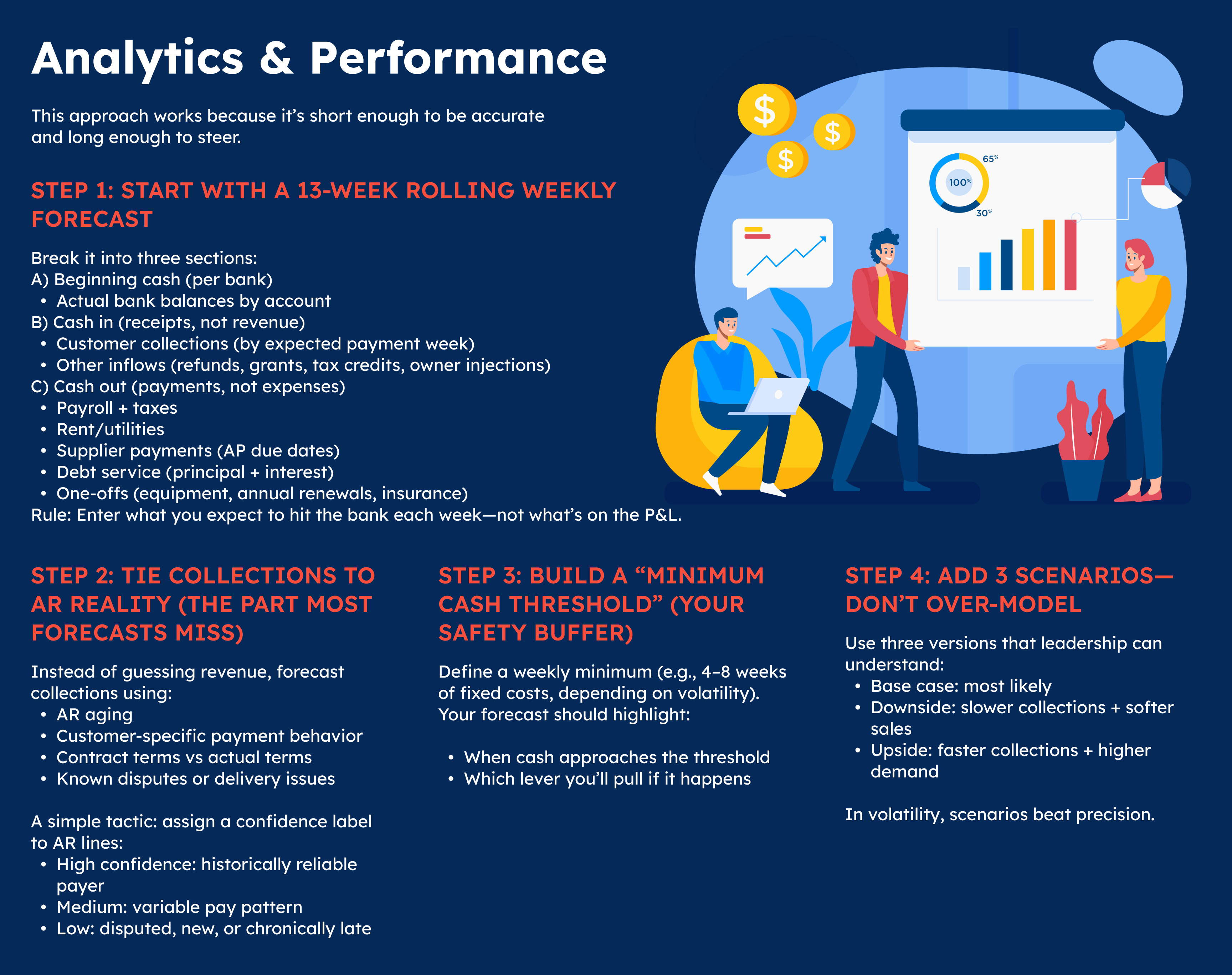
For SMEs in volatile markets, cash forecasting doesn’t need to be complex—it needs to be operational. The method that works is a 13-week rolling forecast, grounded in AR collections, structured cash-out scheduling, and a weekly review cadence with clear actions.
If you can answer these weekly, your forecast is doing its job:
- What’s our cash position 4, 8, and 13 weeks out?
- What’s the biggest risk to cash this month?
- What action are we taking this week to protect liquidity?
With consistent execution—often supported by partners like Xerosoft Global—SMEs can turn volatility into manageable, informed choices.