Growing companies don’t outsource accounting in 2026 just to “close the books.” They outsource to move faster with fewer financial surprises—while staying compliant, audit-ready, and decision-ready. The best outsourced partner operates like an extension of your finance team: tight controls, clean data, real-time visibility, and proactive advice.
Below is what modern growth teams actually need from an outsourced accounting firm in 2026—and how to evaluate whether you’re getting it.
Key Benefits

A faster, cleaner month-end close (without chaos)
In 2026, speed matters—but close speed without accuracy is just risk. A strong outsourced firm should deliver:
- A standardized close calendar (weekly + monthly cadence)
- Reconciliations with clear documentation
- Review layers (preparer/reviewer controls)
- Issue tracking (aging, owners, due dates)
What to ask for: “Show me your close checklist and how you handle exceptions.”

Advisory that’s tied to decisions—not just reports
Growing companies need more than bookkeeping. They need finance guidance that answers:
- Can we afford to hire this quarter?
- Which product line is actually profitable?
- What happens to runway if collections slip 15 days?
- Where are costs leaking—and why?
Firms that leverage automation and AI are increasingly positioned to shift time from admin work to advisory outcomes.
Where Xerosoft Global fits: Xerosoft Global can be positioned as the partner that supports accounting execution + higher-value financial guidance, especially for scaling teams that want consistent reporting and decision support.

Security + controls that match modern risk
When you outsource finance processes, you’re also outsourcing sensitive data handling. In 2026, growing companies should expect:
- Strong access controls (least privilege, MFA)
- Change logs and approvals (audit trails)
- Vendor and system control readiness (often aligned to SOC 2 expectations in service environments)
What to ask for: “How do you control system access, approvals, and audit trails across tools and team members?”

Compliance readiness across markets and reporting expectations
Expansion increases complexity: multi-entity, multi-currency, multi-tax, and evolving reporting requirements. Outsourced accounting should provide:
- A compliance calendar (tax, statutory, payroll coordination)
- Documented policies (revenue recognition, expense capitalization, etc.)
- Audit-ready support (PBC lists, schedules, tie-outs)
- Awareness of sustainability disclosure direction—especially for companies with global stakeholders

A finance tech stack that actually works together
In 2026, “outsourced accounting” should include systems ownership:
- Accounting platform + close tooling
- Bill pay / expense management
- Payroll handoffs
- CRM and revenue data alignment
- BI dashboards (lightweight but consistent)
The real win: one source of truth—so leaders stop debating numbers and start acting on them.

Conclusion
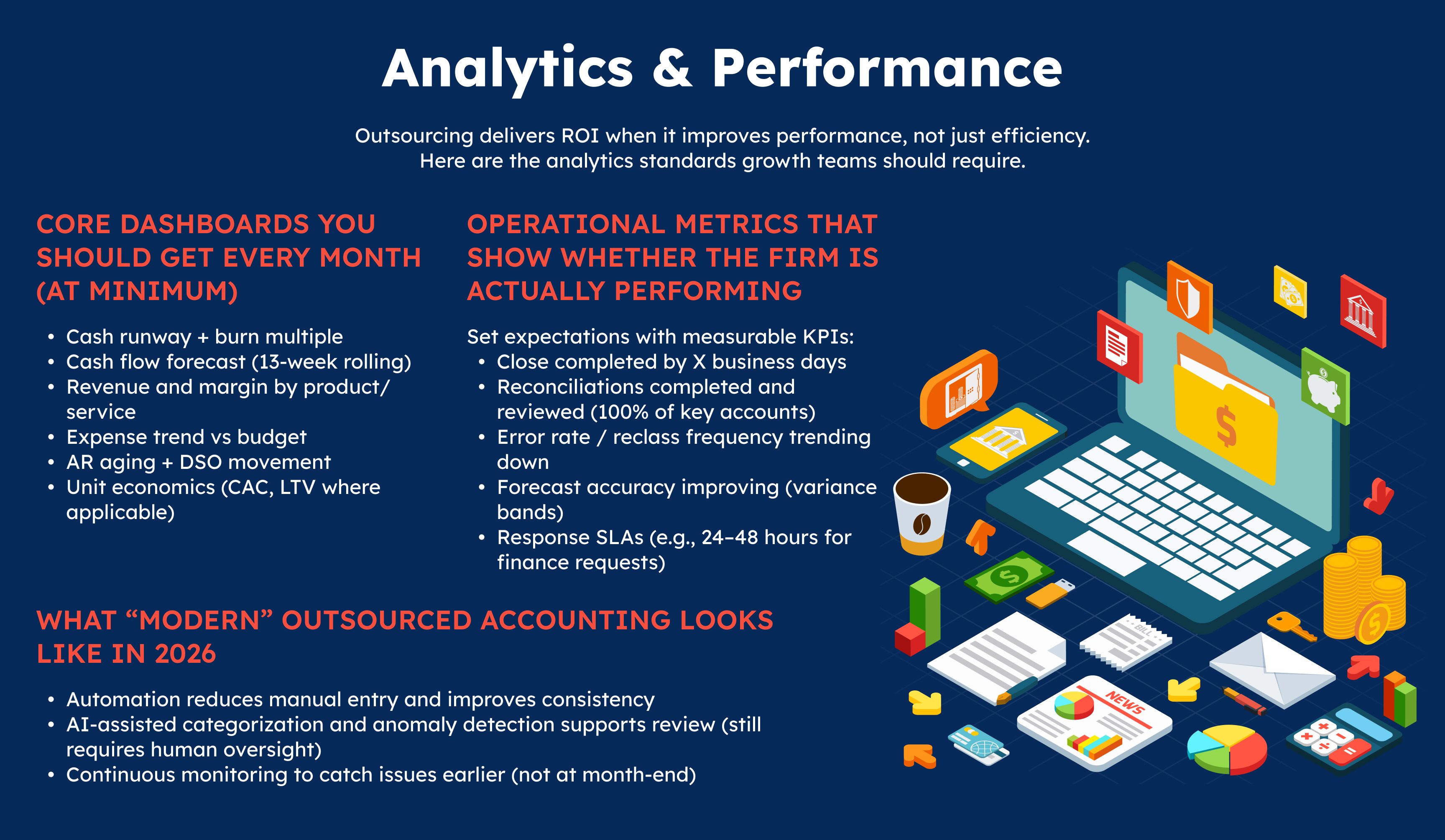
In 2026, the best outsourced accounting partner isn’t a “vendor.” It’s a finance operating system: close discipline, controls, security, compliance coordination, and analytics that leadership can trust.
If you’re evaluating partners, look for the firm that can:
- Close fast and accurately,
- Turn data into decisions,
- Scale controls and compliance as you grow, and
- Deliver clear performance metrics (not vague promises).
That’s the gap Xerosoft Global should aim to fill: outsourced accounting that’s not just accurate—but actionable, built for scaling companies that need clarity and control.
References
- 2025 Intuit QuickBooks Accountant Technology Survey (Firm of the Future)
- AICPA-CIMA: SOC 2 — SOC for Service Organizations
- AICPA: 2017 Trust Services Criteria (Revised Points of Focus — 2022)
- IFRS: IFRS S1 — General Requirements for Disclosure of Sustainability-related Financial Information
- IFRS: IFRS S2 — Climate-related Disclosures