Fast growth is exciting—until messy books slow you down. For startups, bookkeeping isn’t just “compliance”; it’s how you protect runway, prove traction to investors, and make confident hiring and pricing decisions. Below are practical best practices that help startups stay audit-ready, forecast accurately, and scale without finance chaos—with Xerosoft Global as a trusted partner for modern bookkeeping systems.
Key Benefits

Protect cash runway with clean, current data

Build investor-ready reporting from day one
Even before you raise, investors expect clear financial statements, consistent metrics, and traceable documentation. Clean books make due diligence faster and reduce last-minute “scramble accounting.”

Scale operations without scaling errors
As transaction volume grows, manual bookkeeping breaks. Best practices like automation, standardized workflows, and policy-based approvals reduce rework and prevent costly mistakes.

Improve compliance readiness (tax + documentation)
Fast-growing startups often expand into new regions, payment methods, or sales models—each comes with tax and documentation requirements. Getting your processes right early avoids painful cleanup later.
Where Xerosoft Global fits: Xerosoft Global can help startups set up scalable bookkeeping, automate routine processing, and implement controls that keep reporting accurate as the business grows.
Best Practices Startups Should Implement Now
Separate business and personal finances (non-negotiable)
- Dedicated business bank account
- Dedicated business card(s) for teams
- Clear expense policies (what’s reimbursable, approvals, receipts)
Set up a scalable chart of accounts (COA)
- Revenue streams (subscriptions, services, marketplace fees, etc.)
- Cost buckets that map to margins (COGS vs operating expenses)
- Sales & marketing subcategories that track CAC drivers
- Payroll split by department (Product, Ops, Support, Sales)
Do reconciliations weekly (not monthly)
- duplicate charges
- missing deposits
- incorrect vendor postings
- fraud or subscription creep
Automate what repeats, review what matters
- bank feeds and transaction rules
- recurring invoices/expenses
- receipt capture + matching
- unusual or high-value transactions
- refunds/chargebacks
- payroll postings
- revenue recognition logic (especially for subscriptions)
Track burn rate and runway like a KPI (because it is)
Minimum monthly reporting should include:
- Net burn (cash out – cash in)
- Runway (cash on hand / net burn)
- Operating margin trend
Top 10 expenses and what changed
Get serious about revenue recognition early
- deferred revenue
- recognized revenue timing
- refunds and credits
- discounts and promotions
Lock down controls and access (especially for remote teams)
Build a monthly close checklist (and keep it consistent)
- reconcile all bank/credit accounts
- review A/R and A/P aging
- validate payroll + contractor costs
- confirm accruals (subscriptions, tools, rent)
- finalize financial statements
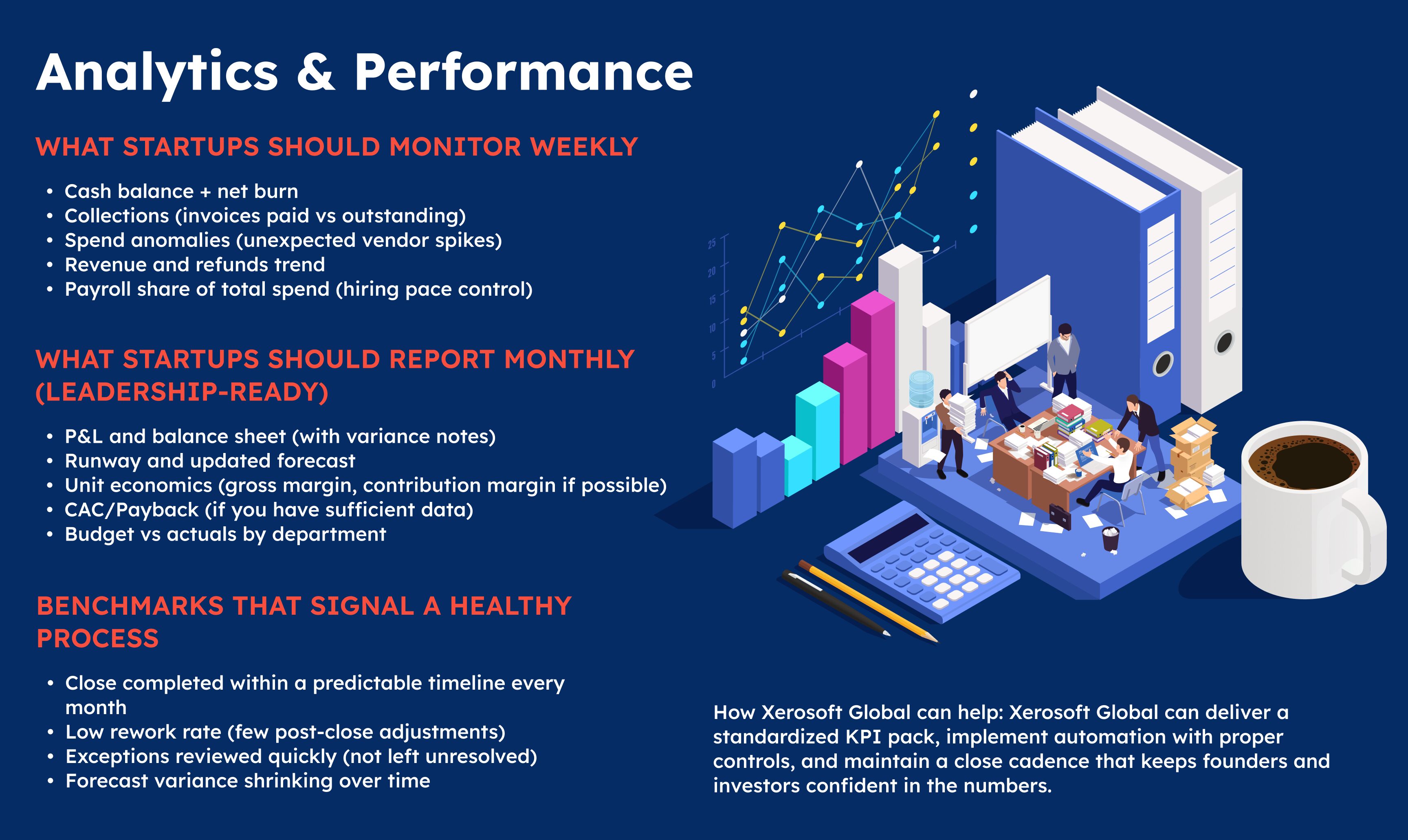
- produce KPI pack for leadership

Conclusion
In a fast-growth market, startups don’t need “more bookkeeping”—they need better financial visibility. The best practices above (weekly reconciliations, scalable COA, automation with review controls, runway tracking, and disciplined close routines) turn bookkeeping into a decision system that protects cash and supports confident scaling. With the right setup, partners like Xerosoft Global can help startups stay investor-ready, audit-resilient, and operationally focused while they grow.
References
- Oracle NetSuite — Continuous Accounting Explained
- Tipalti — Accounting Trends (automation + modern finance operations)
- UK NCSC — Cloud Shared Responsibility Model (security basics)