ESG reporting is rapidly becoming audit-style work: structured metrics, repeatable controls, traceable evidence, and consistency across periods. The problem is that many ESG datasets still live in spreadsheets and siloed tools—making assurance painful and trust fragile. The opportunity: treat ESG data the way finance treats money—with bookkeeping discipline. That’s where Xerosoft Global can help: turning sustainability data into an “ESG sub-ledger” that is controlled, reconcilable, and ready for external review.
Key Benefits

“Audit-ready” ESG starts with finance-grade data discipline
Sustainability reporting rules are tightening—especially in the EU under the Corporate Sustainability Reporting Directive (CSRD), which requires more consistent, decision-useful disclosures.
Bookkeeping principles (controls, audit trails, approvals, documentation) are exactly what ESG teams need to move from storytelling to defensible reporting.

Faster reporting cycles with less spreadsheet chaos
When ESG data is captured through standardized workflows—templates, rules, and approval paths—you reduce manual consolidation and last-minute “number chasing.” That’s critical as reporting expectations scale in frequency and scope.

Better governance alignment across ESG frameworks
Many organizations are mapping disclosures to frameworks like the ISSB’s IFRS Sustainability Disclosure Standards, which organize reporting around governance, strategy, risk management, and metrics & targets.
Bookkeeping-style processes help ensure those disclosures are consistently supported by evidence and controlled data.

Stronger credibility with stakeholders (and lower reputational risk)
Frameworks like the GRI Standards are designed to improve comparability and credibility in sustainability reporting.
When your ESG metrics are tracked with reconciliations and documentation, you reduce the risk of restatements, greenwashing accusations, and assurance qualifications.
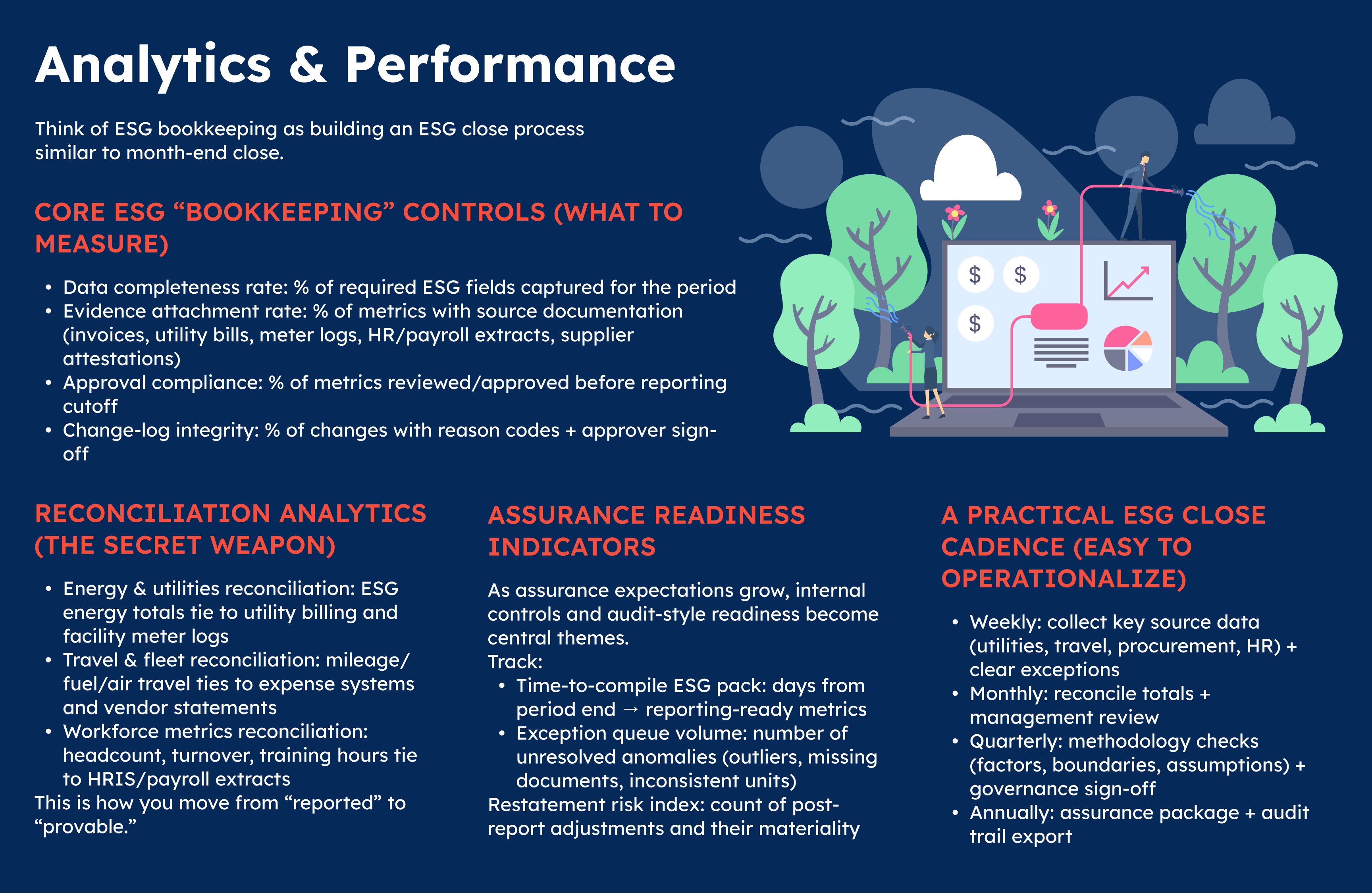
Where Xerosoft Global fits: Xerosoft Global can implement ESG bookkeeping as a service: data mapping, controls, evidence management, reconciliation routines, and reporting packs—so sustainability numbers behave like financial numbers.

Conclusion
Sustainability reporting is converging with financial reporting in one crucial way: trust is now built on controls. Regulations like CSRD and global standards like ISSB/IFRS S1/S2 push organizations toward structured disclosures that must be consistent, explainable, and supportable with evidence.
By applying bookkeeping discipline—reconciliations, audit trails, approvals, and documentation—companies can transform ESG reporting from a spreadsheet exercise into an assurance-ready system. Xerosoft Global can lead that transformation by implementing ESG bookkeeping processes that scale with the business and stand up to scrutiny.