The rise of the gig economy has transformed the world of work. Today, millions of freelancers, contract workers, and part-time professionals provide essential services across a variety of industries — from delivery drivers and virtual assistants to graphic designers and consultants. While this shift offers flexibility and opportunity, it also presents unique payroll challenges that businesses must address.
For companies navigating this terrain, strategic payroll solutions — like those offered by Xerosoft Global — are increasingly critical. Customizing payroll processes for gig workers not only ensures compliance but also enhances worker satisfaction and organizational efficiency.
Payroll in the Gig Economy: By the Numbers
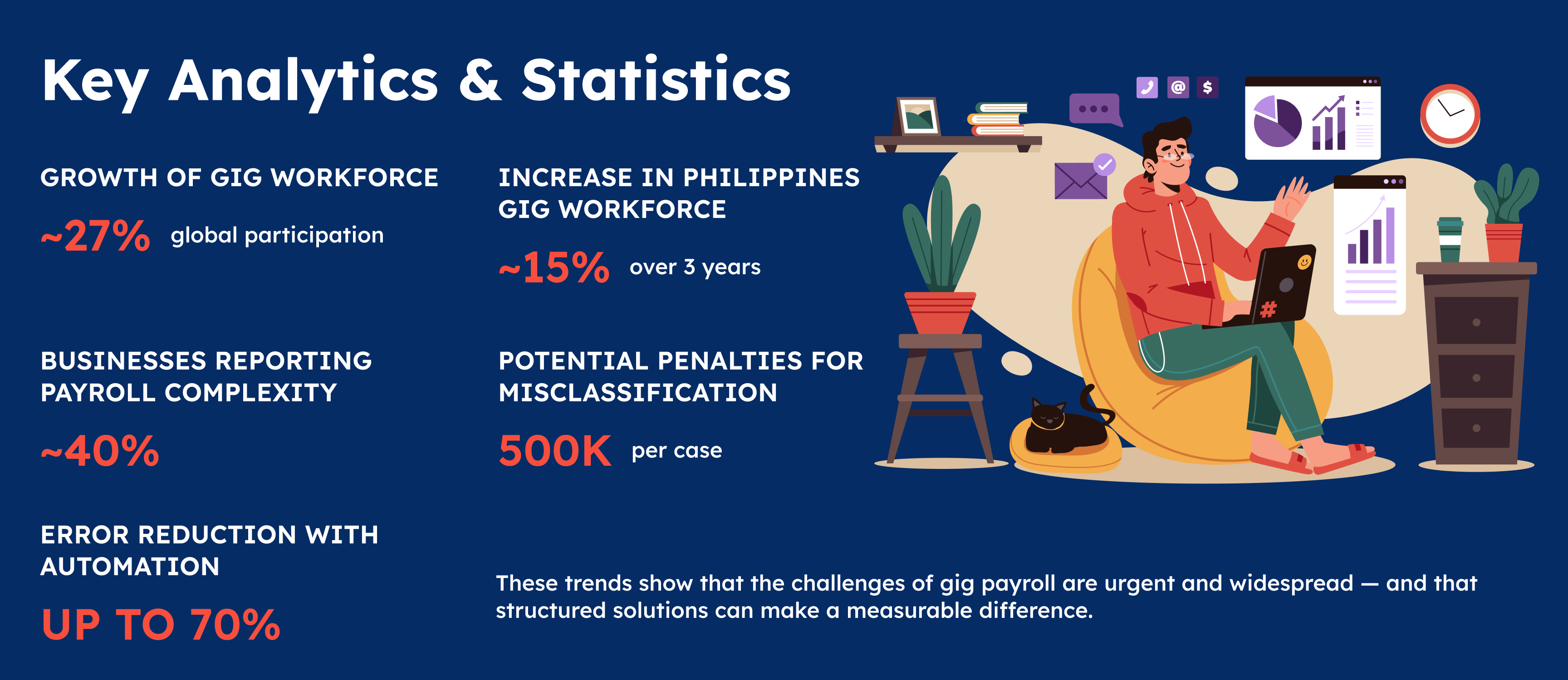
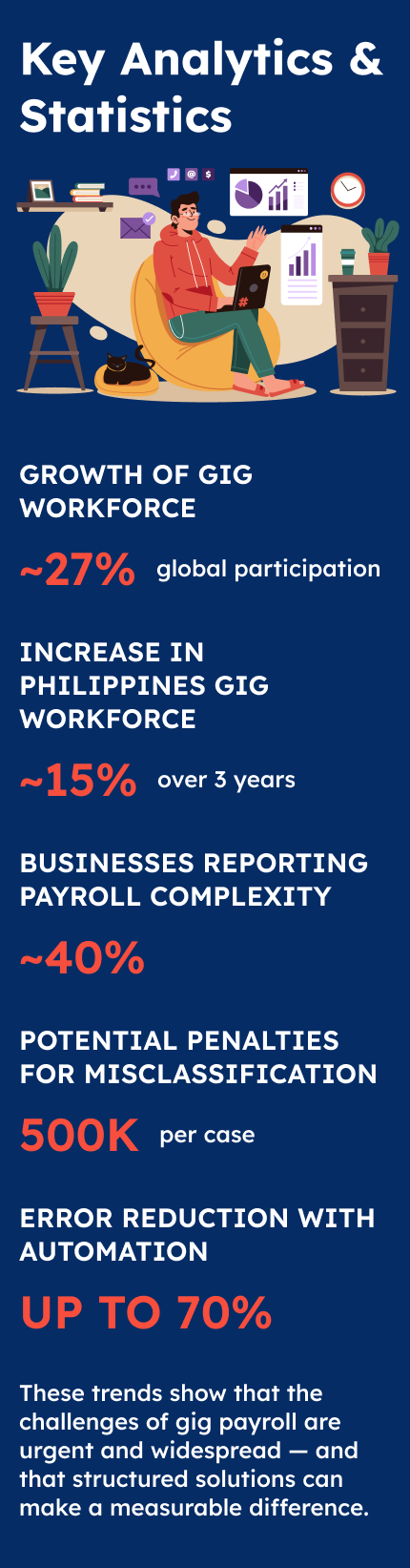
- Approximately 27% of the global workforce currently participates in gig or freelance work.
- In the Philippines, gig economy participation increased by 15% over the last three years, reflecting growing demand for flexible labor.
- Up to 40% of businesses report payroll complexity as a key challenge when managing gig workers.
Key Challenges of Gig Payroll

Classification and Compliance Issues
- Tax penalties of up to ₱500,000 per case in audit assessments
- Retroactive employee benefit contributions
- Reputational risk and legal disputes

Irregular and Variable Payments
- Calculating payments accurately for variable tasks
- Ensuring timely payments across pay cycles
- Integrating bonuses, incentives, or platform fees

Changing Tax Obligations
- Self-employed individuals may be responsible for their own BIR contributions
- Businesses may need to issue BIR Form 2307 for tax withheld
- Ensuring correct tax compliance across varied jurisdictions

Record Keeping and Reporting
- Accurate time logs
- Payment histories
- Tax and social contributions
Solutions to Gig Payroll Challenges
Automated Payroll Systems
- Calculates variable rates and irregular hours
- Ensures accurate, on-time payouts
- Generates digital pay records
Clear Worker Classification Framework
- Define roles and classification criteria
- Regularly review classification status
- Integrate classification rules into payroll setup
Centralized Tax Reporting Tools
- Automated BIR reporting
- Accurate tax withholding calculations
- Digital compliance dashboards
Digital Record-Keeping and Transparency
- Workers can access payment histories
- Employers maintain audit-ready documentation
- Real-time reporting reduces disputes
Key Benefits of Modern Gig Payroll Solutions
Greater Compliance and Reduced Risk
Accurate classification and automated tax handling minimize penalties and disputes.
Enhanced Worker Satisfaction
Timely, transparent payments foster trust and engagement among gig workers.
Time and Cost Savings
Automation reduces administrative effort and streamlines payroll processes.
Audit-Ready Documentation
Digital records ensure faster audits and improved compliance readiness.
Scalability for Business Growth
As the gig workforce grows, systems by Xerosoft Global enable businesses to scale payroll without scaling complexity.
Conclusion
The gig economy presents a wealth of opportunity — but it also introduces unique payroll challenges that traditional systems struggle to handle. From worker classification and variable pay to tax compliance and reporting requirements, businesses must adopt advanced payroll strategies to stay competitive and compliant.