As we enter the 2025 corporate tax season, Chief Financial Officers (CFOs) and finance leaders must navigate evolving tax landscapes both domestically and internationally. With new legislative changes, compliance requirements, and shifting enforcement expectations, staying informed isn’t just smart — it’s essential for financial performance and risk management. In this post, we break down the most impactful tax filing updates for 2025, offer key insights backed by analytics, and explain how organizations like Xerosoft Global are adjusting to—and benefiting from—these changes.
What’s New in Corporate Tax Filing for 2025
Changing Tax Regimes Globally
Across jurisdictions, corporate tax rules are evolving:
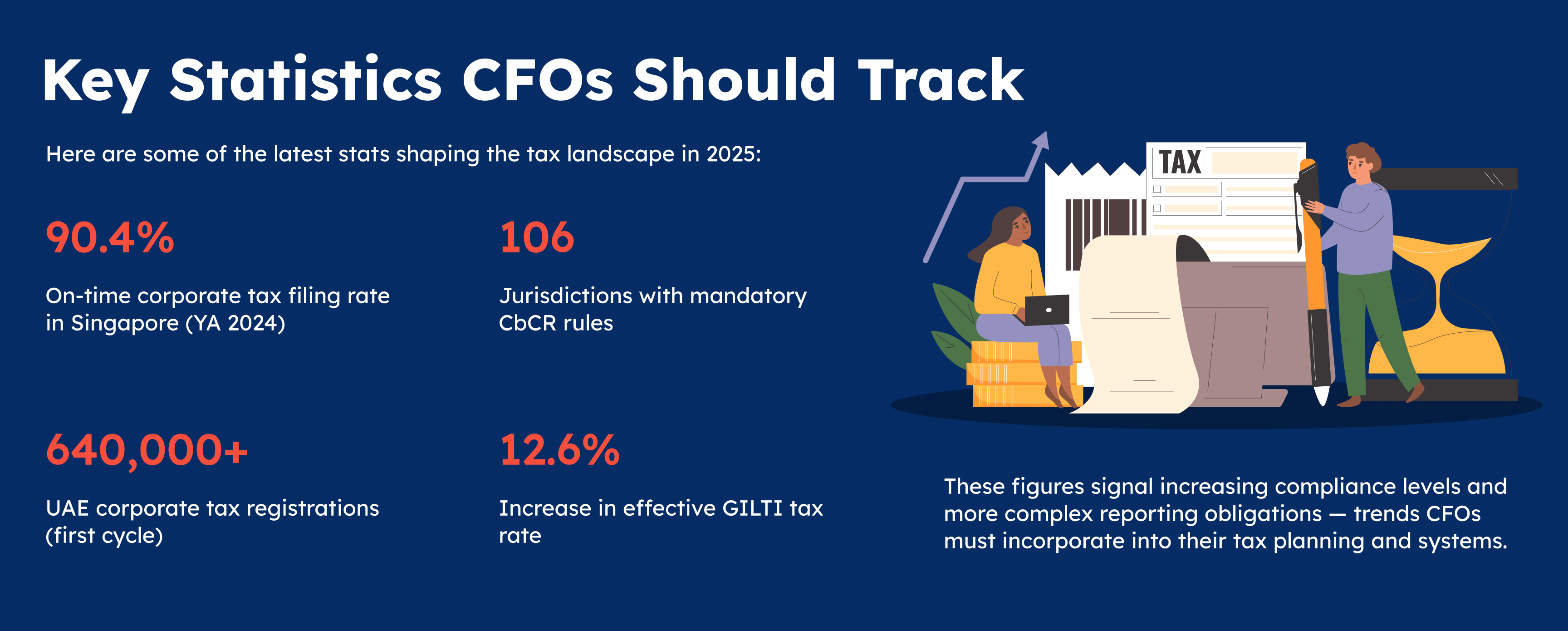
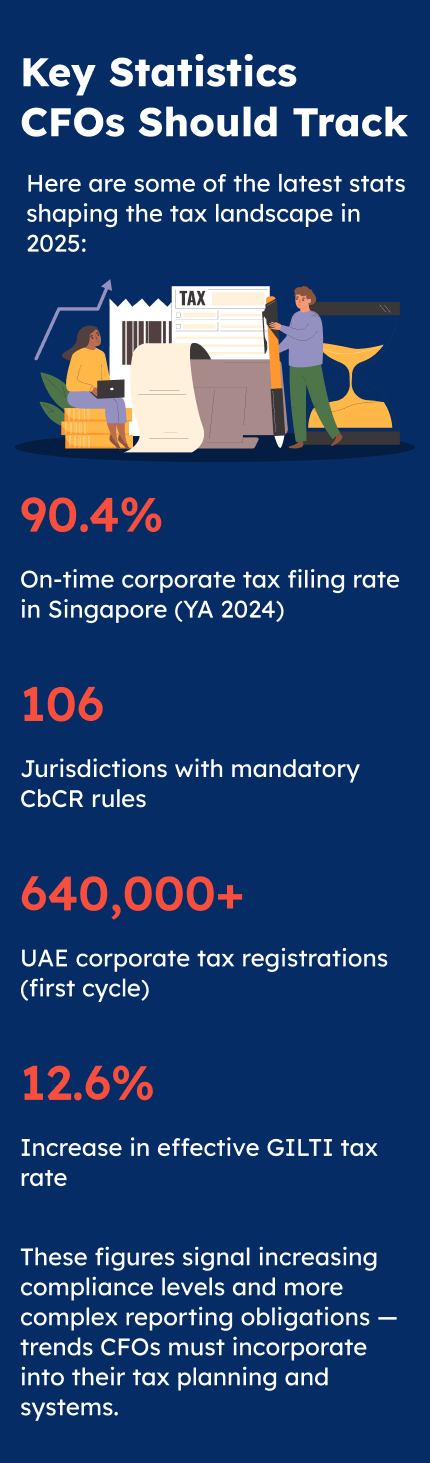
- BEPS and mandatory disclosures: According to the OECD’s Corporate Tax Statistics 2025, 106 jurisdictions now enforce mandatory country-by-country reporting (CbCR), signaling broader transparency expectations for global multinationals.
- U.S. GILTI reforms: Updates to Global Intangible Low-Taxed Income (GILTI) rules will increase the effective tax burden on certain foreign subsidiary earnings after Dec. 31, 2025, complicating multinational filings.
- Middle East corporate tax compliance: For example, the UAE has achieved record corporate tax registrations — over 640,000 companies — since implementing its first corporate tax regime, as authorities bolster filings with deadline extensions and support.
Stricter Penalties and Compliance Expectations
- In some regions, audited financial statements are mandatory for large taxpayers during filing.
- Penalties for incomplete or late filings have increased, emphasizing the need for robust internal controls.
- Digital filing and recordkeeping (e‑invoicing systems) are more widely enforced, particularly in emerging markets.
CFO Priorities for 2025 Tax Filing
✔ Strengthen Internal Tax Infrastructure
Investment in advanced tax technology (e.g., automated reporting, real‑time analytics) ensures accuracy and speeds up filing processes — a necessity for high compliance rates like those observed in Singapore.
Companies like Xerosoft Global have increasingly adopted digital tax reporting tools to handle multi‑jurisdictional compliance, reducing manual errors and staying ahead of regulatory deadlines.
✔ Reconcile Global and Local Tax Rules
For multinational corporations, reconciling differing tax mandates remains a priority:
- Understand cross‑border filing requirements and minimum tax regimes.
- Use tax analytics dashboards to assess exposure.
- Standardize data collection to support consistent filings across subsidiaries.
✔ Enhance Risk and Penalty Management
With stiffer penalties for late or erroneous filings, CFOs must build strong internal audit and controls:
- Internal reviews before submissions.
- Scenario planning for penalty impact.
- Engagement with external experts to interpret changing legislation.
Key Benefits of Effective 2025 Tax Filing

Better Cash Flow Forecasting
Digital tracking and accelerated filing help CFOs project after‑tax cash flows more accurately.

Enhanced Strategic Planning
Data‑driven tax insights feed into broader financial planning, informing decisions around investments, acquisitions, and geographic expansions.

Competitive Risk Management
Up‑to‑date compliance protocols reduce audit risks, fines, and governance concerns — improving investor confidence.

Operational Efficiency
Automated systems connected to accounting platforms enable faster closing cycles and reduce workload for finance teams.
Conclusion
The corporate tax landscape in 2025 presents both complex challenges and strategic opportunities. New rules and enhanced reporting obligations require CFOs to invest in technology, understand evolving international tax standards, and sharpen internal controls. Organizations that effectively adapt — much like Xerosoft Global — can turn tax compliance into a competitive advantage, transforming risk management into business value.
Staying informed and proactively preparing for new tax rules isn’t just smart governance — it’s essential for future financial success.
References
- Nucleus. Global Regulatory Updates
- OECD. Corporate Tax Statistics 2025
- Institute of Corporate and Taxation. UAE Tax Law 2025 – What Changed and How to Prepare
- Proconsult. Corporate Tax Law UAE: A Comprehensive Guide to Understanding the 2025 Tax Transformation and Compliance Requirements