In 2026, payroll is no longer just a routine administrative function—it has evolved into a strategic tool that can provide deep insights into workforce trends, labor costs, and organizational efficiency. With the increasing complexity of compliance, remote work, and global payroll demands, businesses are turning to payroll analytics to drive smarter decision-making.
Organizations leveraging advanced analytics platforms, like those offered by Xerosoft Global, are gaining a competitive edge by turning payroll data into actionable insights that go beyond traditional number-crunching.
What Are Payroll Analytics?
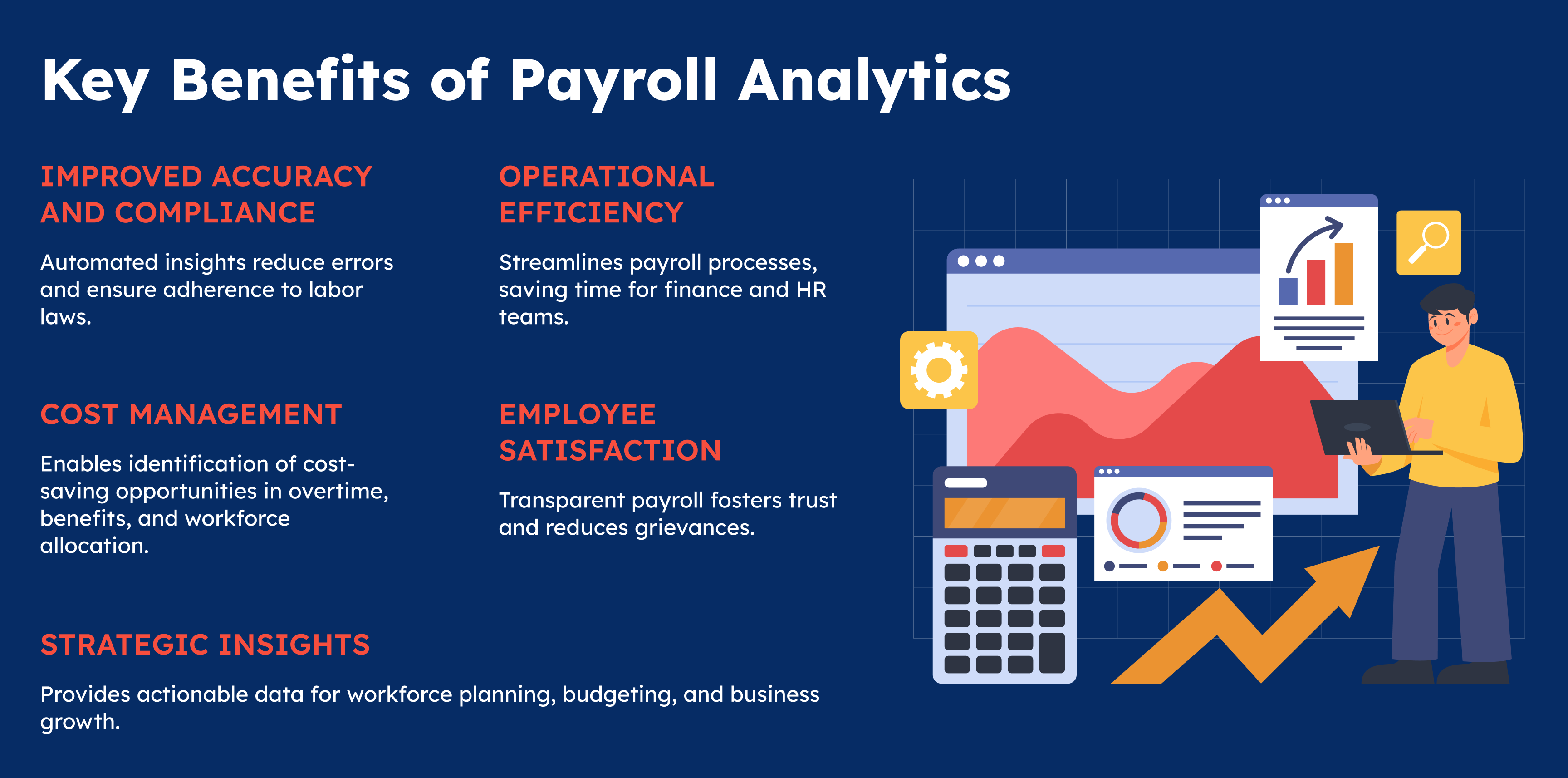
Payroll analytics involves collecting, analyzing, and interpreting payroll data to uncover patterns, trends, and opportunities for operational improvement. By integrating payroll with HR and finance systems, analytics provide a real-time view of employee costs, productivity, compliance risks, and strategic workforce planning.
Why Payroll Analytics Is Critical in 2026

Increasing Complexity of Payroll
With global expansion, hybrid work models, and evolving labor laws, payroll management is more complex than ever. Analytics allow companies to monitor compliance, track overtime, and identify discrepancies before they become costly issues.
Statistic:
According to a 2026 Deloitte report, 65% of finance leaders say payroll analytics is essential for ensuring compliance and avoiding penalties in complex regulatory environments.

Cost Control and Optimization
Payroll is typically one of the largest expenses for any organization. Analytics enable companies to identify cost drivers, assess overtime patterns, and optimize workforce allocation, leading to more efficient spending.
Analytics Insight:
Businesses using payroll analytics can reduce labor costs by 5–15% annually through data-driven workforce planning.

Enhancing Employee Experience
Timely, accurate, and transparent payroll is crucial for employee satisfaction. Analytics help identify payroll errors, track pay discrepancies, and measure the impact of benefits programs, ensuring employees are paid correctly and fairly.
Statistic:
A study by PwC shows that 75% of employees consider payroll accuracy and transparency a top factor in job satisfaction.

Supporting Strategic Decision-Making
By analyzing payroll trends, organizations can make informed decisions about hiring, promotions, compensation adjustments, and benefits optimization. Analytics also help predict future payroll costs and workforce requirements.
Insight:
With predictive payroll analytics, HR teams can forecast staffing needs 6–12 months ahead, reducing unexpected labor shortages or overspending.
The Future of Payroll Analytics
As we progress through 2026, payroll analytics is set to become even more predictive and AI-driven. Advanced tools will not only report historical data but also forecast workforce trends, labor costs, and compliance risks with high accuracy. Organizations that adopt these solutions early will gain a strategic advantage in both cost management and employee engagement.
Conclusion
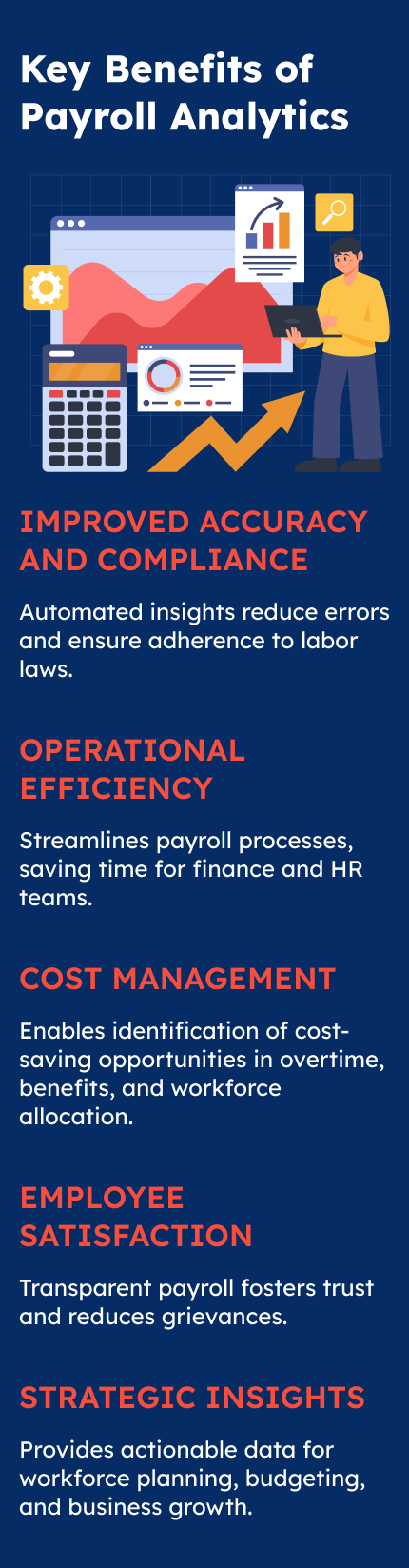
Payroll analytics is no longer just a nice-to-have; it is a critical strategic tool in 2026. By transforming payroll data into actionable insights, companies can enhance accuracy, control costs, improve employee satisfaction, and make informed business decisions.
Partnering with Xerosoft Global allows organizations to harness the power of payroll analytics, combining real-time data with expert guidance to stay ahead in an increasingly competitive business environment.
References
- European Business Magazine. Trends in Payroll Analytics: Turning Payroll Data into Strategic Insights
- TMCnet. Payroll Analytics: Transforming Workforce Management
- GlobeNewswire. HR Payroll Software Market Opportunities and Strategy Report 2025-2034: AI-Powered Innovations Set to Revolutionize the Industry with Oracle, SAP, Automatic Data Processing, Sage, and Paychex Leading
- CloudPayroll. Unlocking the power of payroll data analytics